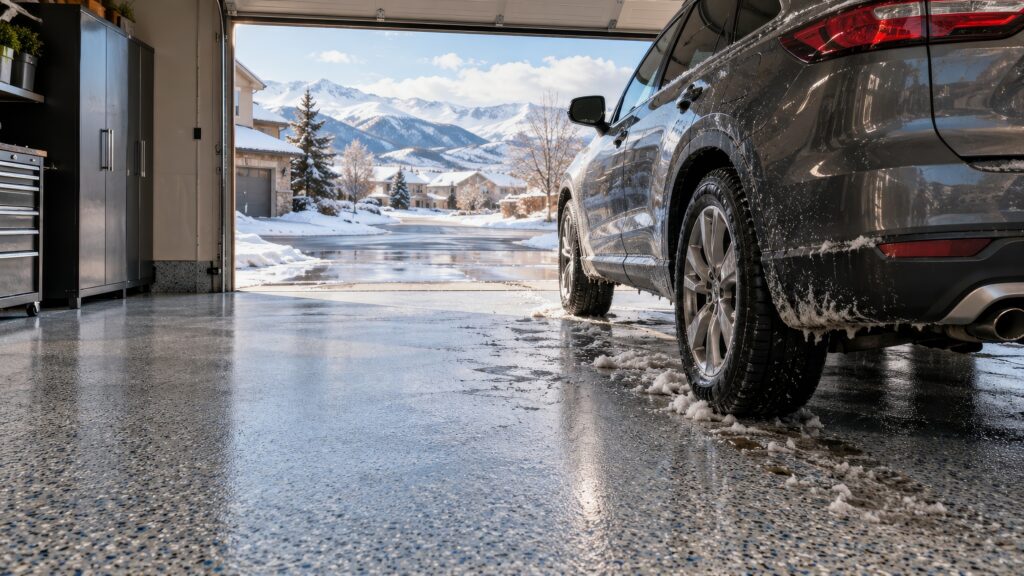

A new epoxy floor often makes a garage, shop, patio, or commercial building look dramatically better. It also protects the concrete and makes cleanup much easier. Still, a good-looking finish depends on what’s underneath.
Some concrete floors need more than a quick cleaning before applying the coating. If you don’t prepare it properly, you will face problems later that shorten the floor’s life. What does the team at Nevada Custom Coatings look for before recommending an epoxy flooring system?
Uneven Concrete Floors
Concrete floors rarely sit perfectly flat. Garage floors often slope toward the door, while patios may slope away from the building so rainwater drains properly. These intentional and minimal slopes usually cause no problem. However, high spots, deep dips, and damaged areas can create problems.
Epoxy naturally follows the shape of the existing concrete it’s laid over. The epoxy does not naturally level the floor by itself. If water already collects in one area, a coating will not correct the drainage issue. Rough sections of concrete also stand out more after the floor receives a smooth, finished surface.
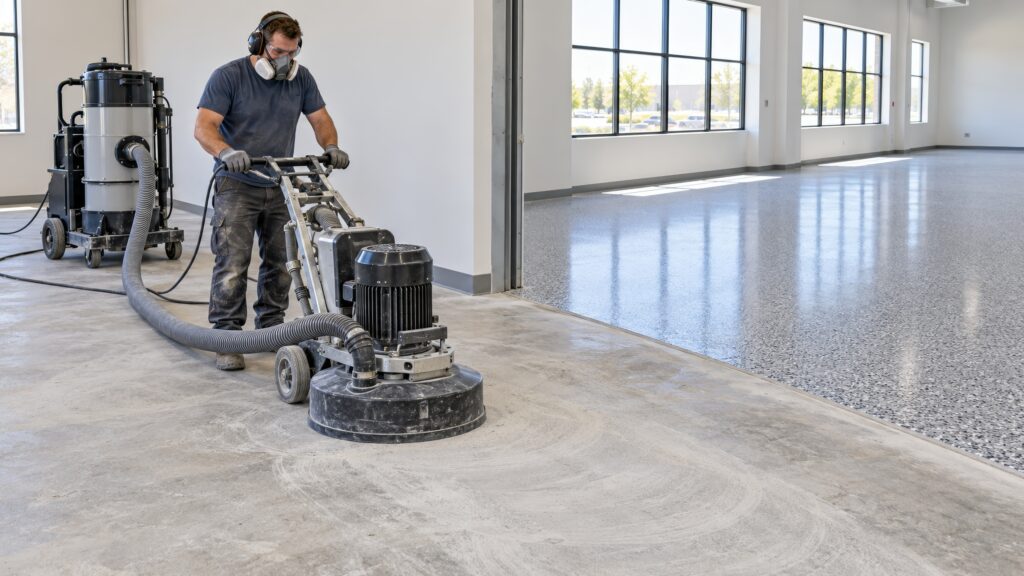
Depending on the floor condition, our team may need to grind down raised areas, fill low spots, or repair damaged concrete before applying the coating. That extra prep work makes a huge difference in the finished floor’s appearance.
Cracks Need Attention
Cracks show up in concrete for many reasons. Perhaps the ground has settled, temperatures changed, or moisture is wicking up through the soil. Concrete also shrinks as it cures and at times creates a small crack. This does not always signal a major problem, but it still deserves a closer look.
Simply coating over even a small crack will not make it disappear. In time, the crack shows through the newly epoxied floor surface. To avoid this, a professional installer cleans and opens the crack, removes loose material, and fills it with a repair product made for concrete coating systems.
Some cracks continue to move and increase in size. Others point to settling or structural trouble deep beneath the slab. These situations may require help from a concrete or foundation specialist before professional epoxy coating work begins.
No repair guarantees that concrete will never crack again. Proper repairs, however, give the new flooring system a much better foundation.
Avoid Epoxy Coating Failure
An epoxy coating needs solid concrete to adhere to. At times, the top of a concrete slab feels soft, dusty, or crumbly. Applying epoxy directly over soft concrete creates a weak link. The epoxy bonds to the surface, but the soft concrete underneath may still break apart, causing the coating to detach and pull up pieces of weak concrete under normal use.
It is important to remove loose and deteriorated concrete material until you reach a firm surface. Minor damage requires grinding and repairs, but a badly deteriorated concrete slab may need more extensive resurfacing or replacement to ensure a strong surface for the epoxy to adhere to.
Check for Moisture
Concrete can look completely dry while moisture is moving through it from below the surface. This happens more often in older buildings, below-grade rooms, and slabs installed without a good vapor barrier. Once trapped beneath an epoxy coating, moisture causes bubbling, dark spots, discoloration, or peeling. White mineral deposits on the concrete also point to an ongoing moisture issue.
When moisture is suspected, the concrete needs testing to ensure you take the right next steps before applying the epoxy coating. Testing will determine whether the concrete floor needs a moisture-control product. Also, if the moisture is due to a known plumbing leak, drainage problem, or groundwater issue, it needs to be repaired first.
Covering a wet slab without understanding the root cause of the moisture does not solve the problem or ensure your epoxy coating lasts as long as it is designed to.
Preparation Makes the Difference
Many people think epoxy installation is just rolling a product across the concrete floor. Proper concrete preparation takes more time than the coating itself and, in reality, is the most important part of laying an epoxy system.
Skipping preparation may lower the price or shorten the installation time, but it also increases the chance of peeling and premature surface failure. A long-lasting floor starts with the work people rarely notice: preparing the concrete.
Start With a Free Consultation
Every concrete floor has its own history, some with minor damage and others with major damage that needs to be addressed prior to laying down a new epoxy coating system. Nevada Custom Coatings offers free concrete consultations for homeowners and businesses throughout Reno and Northern Nevada. We carefully inspect the existing concrete, honestly explain any concerns we find, and recommend the best treatment for your concrete.
If a repair falls within our expertise, we quote it as part of your epoxy project. If the concrete needs specialized structural work, we are happy to recommend a reputable company to complete it before we begin your epoxy coating project.
Once the concrete slab is ready, Nevada Custom Coatings can transform it with an epoxy flooring system, decorative finish, stain, polish, or overlay. Call our Reno team or complete our online form to schedule your free consultation.